 Search
  Client Portals
  020 7444 4030

The past week has seen a significant escalation in geopolitical tension, with the US and Israel conducting military action against Iran. For many, especially those with family or personal ties to the region, the situation feels immediate and worrying. Even for those less directly connected, the headlines and market reaction are hard to ignore.
Anyone hoping for a swift de‑escalation over the weekend will have been disappointed. Current indications suggest both sides remain willing to continue military operations. While the conflict hasn’t broadened substantially, one material development is the halt in energy shipments through the Strait of Hormuz – a critical route for global oil and gas supplies. A clear path back to normal trading conditions is, for now, difficult to identify.
As of this morning (9 March), Brent crude oil has moved above $100 per barrel. Global equity markets have opened weaker, with Japan and South Korea experiencing some of the sharpest falls given their reliance on imported energy. Concerns around the broader economic outlook are already circulating, with the International Energy Agency exploring the possible release of emergency oil reserves. Comparisons with previous periods of energy‑driven inflation – including the 1970s – are appearing across the media.
However, as history has shown, conditions can shift quickly. A ceasefire, renewed access through the Strait, or coordinated reserve releases could ease pressures faster than expected. We anticipate elevated market volatility in the short term, but this is not a moment for heightened alarm.
How markets are responding
We believe that having a diversified portfolio is the best way to navigate periods of volatility. So, it’s more about how you set up the overall strategy than trying to react and change your investments during turbulent periods. With our investment independence, we work with several different investment providers. This approach allows us to select the best investment solutions available. We’re monitoring how the investment managers we work with are responding. For a geopolitical shock to create a buying opportunity, markets need to fall to a point where the cheaper price makes it worth the risk of things getting worse. The investment managers will use their judgement to determine if there are opportunities.
US equities have been the most resilient region, due to the US not being reliant on Middle Eastern energy exports and because the dollar has risen vs. GBP, offsetting some of the fall in US equities for sterling investors.
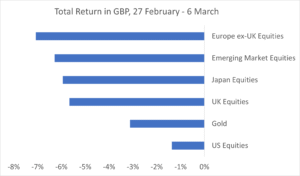
Source: FactSet. Total return in GBP for major equity indices.
Higher costs ahead?
Geopolitical events begin to shape markets when they affect growth, inflation or interest‑rate expectations. A sustained period of elevated energy prices has the potential to influence all three.
We have already seen early signs of this in the UK:
- Some energy providers have withdrawn fixed‑price tariffs
- Several lenders have raised mortgage rates
- UK Gilt yields have risen as investors factor in the possibility that inflation settles at a higher level for longer
Energy pricing is also more nuanced than the headlines suggest. Oil and gas markets differ by region, and both operate through futures contracts. Prices for March and April delivery have risen sharply, while contracts for later in 2026 have moved far less – a sign that markets expect the disruption to be temporary rather than structural.
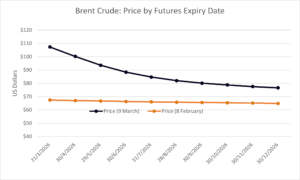
Source: FactSet. Prices as at 8:30am GMT, 9 March 2026.
What could lead to resolution?
A lasting resolution will require cooperation across the parties involved. This situation differs from the tariff‑driven volatility of 2025, when the US administration had direct control over the policies causing disruption. In this conflict, even an immediate halt to US military action would not instantly restore safe passage for energy shipments.
The duration of the conflict will depend on both the willingness and capability of each side to continue. There are early indications that the conflict may not be prolonged, but no guarantees. Domestic US political pressures, including the upcoming midterm elections, and Iran’s capacity to sustain missile activity will all influence the trajectory. Blocking the Strait of Hormuz is unlikely to be a long‑term strategy for Iran.
Our view for investors
Events like these are unsettling, but the best course of action is almost always to remain invested. When risks lessen, markets can rise rapidly and unexpectedly. If you aren’t invested, you can miss out on those gains. The best approach is to have a long-term financial plan and diversified exposure to different parts of the market. If you have any concerns, please contact your adviser.
We’ll continue to monitor markets and provide suitable strategies and financial plans to support your long-term needs and objectives.
This communication is for general information only and does not constitute advice on investments, taxation, legal matters or any other matters. Past performance is not a guide to future returns or results.


