 Search
  Client Portals
  020 7444 4030

Building an ISA worth £1 million is a long-term ambition. It’s less about making one perfect investment decision and more about having a clear plan, investing regularly and giving your money time to grow. Staying invested and spreading risk across a range of investments may also help you keep your plans on course, although returns are never guaranteed and tax rules can change.
By Craig Hendry, Managing Director, PWM Scotland
In this article
- How an ISA could grow over time
- Why staying invested matters
- The role of diversification
- Practical habits that may help build long-term wealth
Is an ISA worth £1 million really achievable?
The idea of becoming an ‘ISA millionaire’ might sound ambitious. However, it doesn’t necessarily depend on finding the next investment success story or making perfectly timed decisions.
For many people, it’s more likely to be the result of patient investing, sensible planning and years of consistent contributions.
An Individual Savings Account, or ISA, allows eligible UK investors to save or invest without paying UK Income Tax or Capital Gains Tax on returns held within the account. This makes an ISA a useful part of many long-term financial plans, although tax treatment will depend on your circumstances, and the rules may change.
Reaching £1 million is never guaranteed. But understanding what you can control could give your money a better opportunity to grow.
Give your investments time to grow
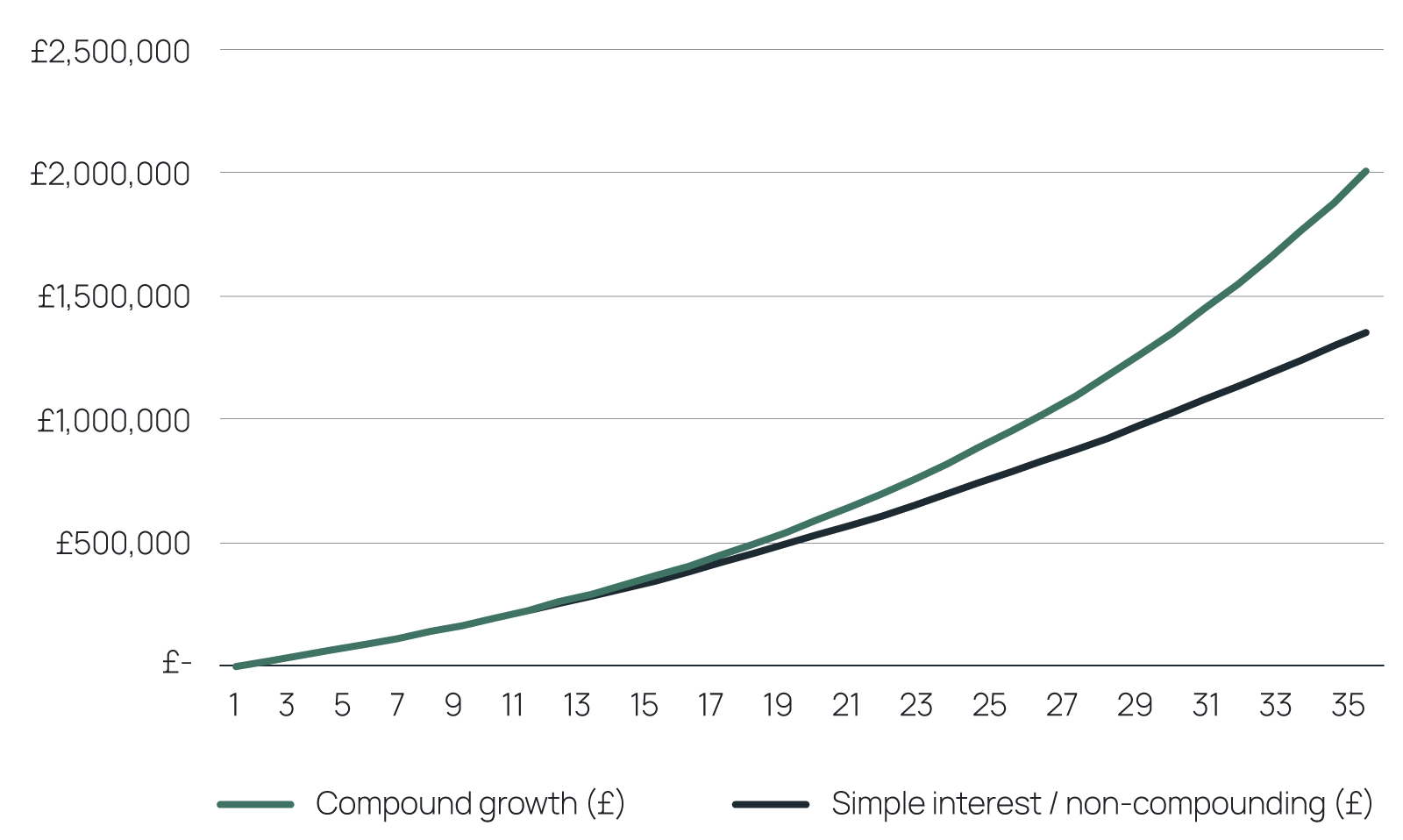
Compound growth means that any investment returns you make can earn further returns in future. Given enough time, this could have a powerful effect.
For illustration, someone investing £20,000 into a stocks and shares ISA each year and achieving average annual growth of 5.5% could build a pot worth around £1 million after approximately 30 years.1
Source: 7IM
This isn’t a forecast. It assumes that contributions are made each year and that growth remains steady. Real investment returns will vary, and the example doesn’t account for fees, inflation or future changes to tax rules. You may also get back less than you invest.1
The important point isn’t the precise figure. It’s the role time can play.
Growth may seem slow during the earlier years of an investment plan. Later, returns have the opportunity to build on both your contributions and previous gains. Starting sooner, even with a smaller amount, could therefore be more valuable than waiting for the ‘perfect’ time to invest.
Make regular investing part of your plan
Investing regularly can turn a distant ambition into a practical habit.
You don’t have to begin by using your full ISA allowance. The appropriate amount will depend on your income, spending, emergency savings and wider goals. You should only invest money that you can afford to leave invested for the longer term.
Monthly contributions can also spread your investments across different market conditions. At times, your money will buy investments at higher prices and, at others, at lower prices.
If you already have a lump sum available, investing it sooner gives that money more time in the market. However, the right approach will depend on your circumstances and how comfortable you are with investment risk. Both regular contributions and lumpsum investing can form part of a suitable financial plan.
Try not to let short-term uncertainty derail a long-term goal
Markets rise and fall. Even a portfolio that grows substantially over several decades is unlikely to travel in a straight line.
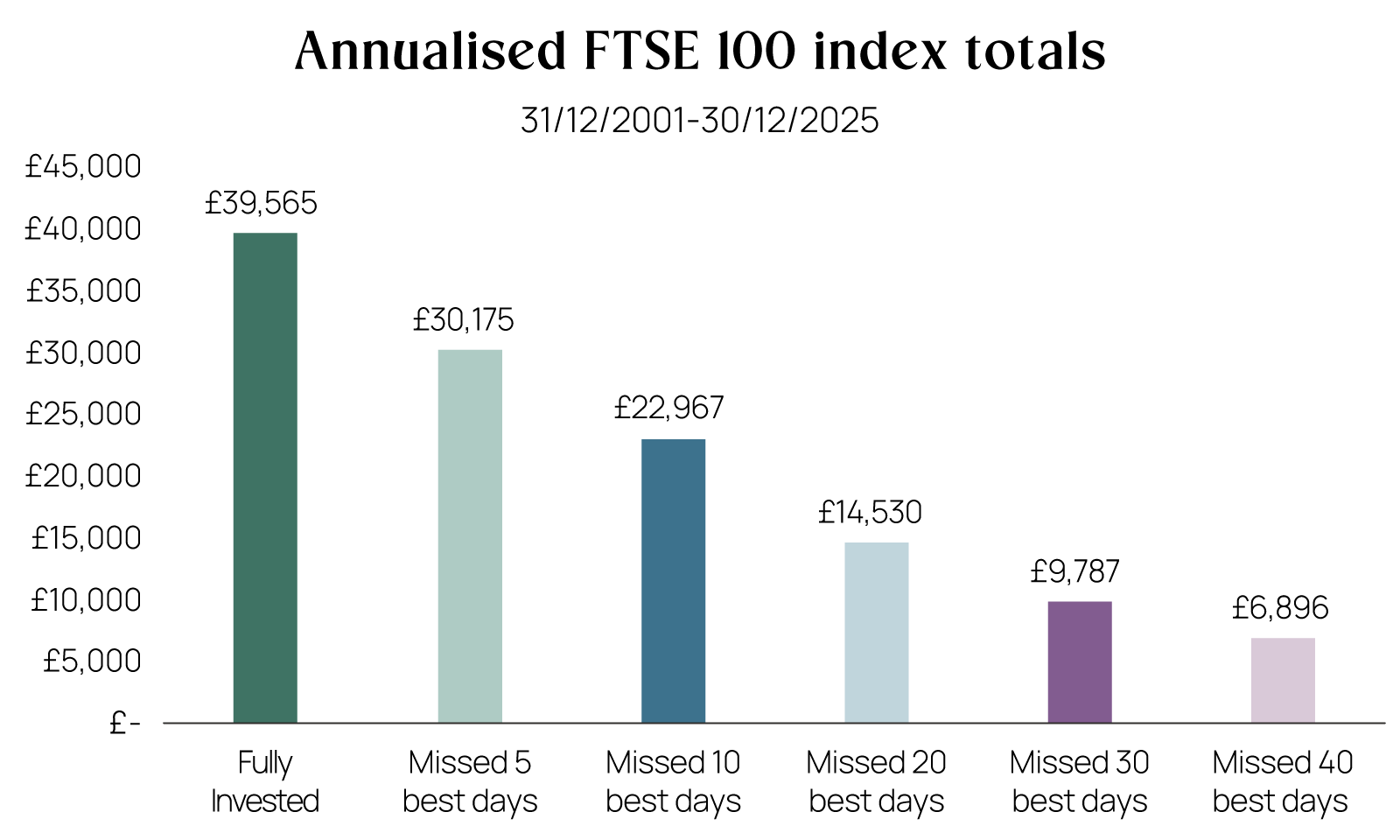
When markets fall, it’s understandable to feel concerned. Selling investments may seem like a way to prevent further losses. The difficulty is that nobody knows exactly when markets will recover.
Some of the strongest market days can occur close to the weakest ones. Leaving the market after a fall could mean missing part of the recovery, which may affect your longer-term results.2
Source: 7IM and FactSet
A well-designed financial plan can help during these periods. It gives you something more reliable than the latest headline on which to base your decisions.
That doesn’t mean a portfolio should never change. Your investments should still be reviewed to make sure they remain appropriate for your goals, timescale and attitude to risk. But a review is different from making a rushed decision in response to short-term market movements.
Don’t depend on a single success story
It’s easy to notice an investment after it has performed well. The challenge is knowing in advance which company, sector or country will deliver the strongest returns next.
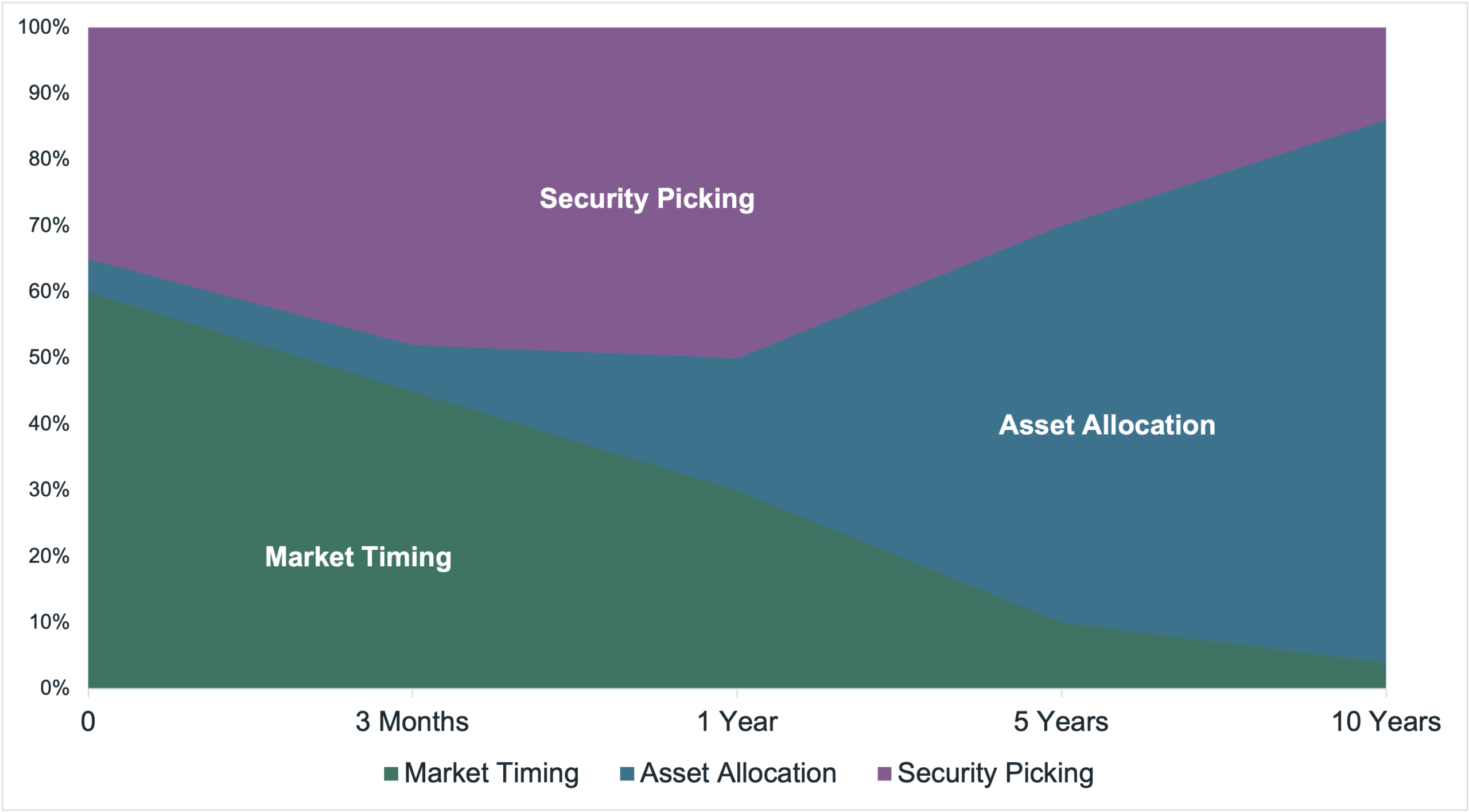
Concentrating too much money in one area can increase the effect if that investment performs poorly. Diversification aims to manage this risk by spreading money across different types of investments, sectors and parts of the world.
A diversified portfolio won’t prevent losses, but it can reduce your dependence on the fortunes of one company or market.
Over longer periods, the mix of assets in your portfolio can make a significant contribution to your overall experience. This is why decisions about asset allocation may be more important than repeatedly trying to select individual winners or time the market.3
Source: 7IM and FactSet
Your ideal mix will depend on matters such as:
- what you’re investing for
- when you’re likely to need the money
- how much investment risk you can accept
- how much loss you could afford to bear
- your other savings, investments and sources of income
These factors can change, so it’s sensible to review your arrangements from time to time.
Focus on your goal, not just the £1 million figure
A seven-figure ISA can be an appealing target, but the number itself may not tell you whether you’re on course to achieve what matters to you.
For example, your real aim might be to retire comfortably, support your family, reduce the time you spend working or have greater freedom later in life. The amount you need will depend on your plans and circumstances.
Inflation also means that £1 million in the future won’t have the same spending power as £1 million today. A useful plan should therefore consider what your future lifestyle may cost, rather than focusing only on a headline figure.
A few simple habits can make a meaningful difference
There’s no single route to creating substantial long-term wealth. However, a clear framework may help you remain focused:
- Define what the money is for. A meaningful goal can make it easier to stay committed.
- Start when you’re able to. The longer your investment period, the more opportunity there is for compound growth.
- Invest at a sustainable level. Choose contributions that work alongside your current needs and emergency savings.
- Spread investment risk. Avoid depending too heavily on one company, sector or region.
- Stay focused during difficult markets. Short-term uncertainty doesn’t automatically require an immediate change.
- Review your plan regularly. Check that your investments still reflect your goals, timescale and circumstances.
- Use your tax allowances where appropriate. The benefits and suitability of an ISA will depend on your personal position.
Becoming an ISA millionaire is never guaranteed. But patient investing, diversification and thoughtful financial planning can give you a clearer route towards your long-term goals.
Frequently asked questions
What is an ISA millionaire?
An ISA millionaire is someone whose ISA savings and investments have a combined value of at least £1 million. This will usually have been built over a long period through contributions and investment growth.
How long might it take to build an ISA worth £1 million?
It depends on how much you contribute, your investment returns and how long your money remains invested. As an illustration, investing £20,000 each year with average annual growth of 5.5% could produce approximately £1 million in around 30 years. This outcome isn’t guaranteed.
Can a stocks and shares ISA reach £1 million?
It’s possible, although there’s no guarantee. A stocks and shares ISA offers the potential for long-term growth, but its value can fall as well as rise.
Do I need to use my full ISA allowance?
No. Using more of your available allowance gives a larger amount the opportunity to grow within the ISA, but you should only invest what you can afford. It’s important to keep suitable funds available for emergencies and shorter-term spending.
Is monthly or lumpsum investing better?
Both approaches can be useful. Monthly investing may make contributions easier to manage and spreads them across different market conditions. Investing a lump sum gives the full amount more time in the market, although short-term falls may feel more noticeable. The right option depends on your circumstances.
Important information
This article is for general information only. It isn’t financial advice or a personal recommendation.
The value of investments, and any income from them, can fall as well as rise. You may not get back the full amount you invest. Past performance isn’t a reliable guide to future returns.
Tax rules depend on your individual circumstances and may change. ISA eligibility and benefits depend on current UK legislation.
Investing for the long term doesn’t guarantee a positive return. Markets can be volatile and investment values can change quickly.
All figures and examples are for illustration only. They aren’t a recommendation to buy or sell a particular investment.
If you’re unsure about the right approach for your circumstances, consider seeking professional financial advice.
Sources
1 7IM. Illustration showing how annual ISA contributions of £20,000 growing at 5.5% a year could reach approximately £1 million after around 30 years.
2 7IM and FactSet. Analysis illustrating the impact of missing some of the market’s strongest recovery days after periods of decline.
3 7IM and FactSet. Data supporting diversification and broader portfolio construction rather than reliance on individual investments.


